
Learn Digital Marketing
In this age of rapid digital advancements, knowing digital marketing is no longer a choice—it’s a must. If you’re a small business owner, a budding marketer, or just interested in learning how online businesses expand, this step-by-step beginner’s guide to digital marketing will guide you through all that you need to learn to start.
What is Digital Marketing?
Digital marketing is the use of digital mediums like websites, social media, email, search engines, and mobile apps to promote products and services. Unlike traditional methods of marketing, it provides real-time information, improved targeting, and increased engagement levels. The main aim is to connect with your target audience where they spend most of their time—online.
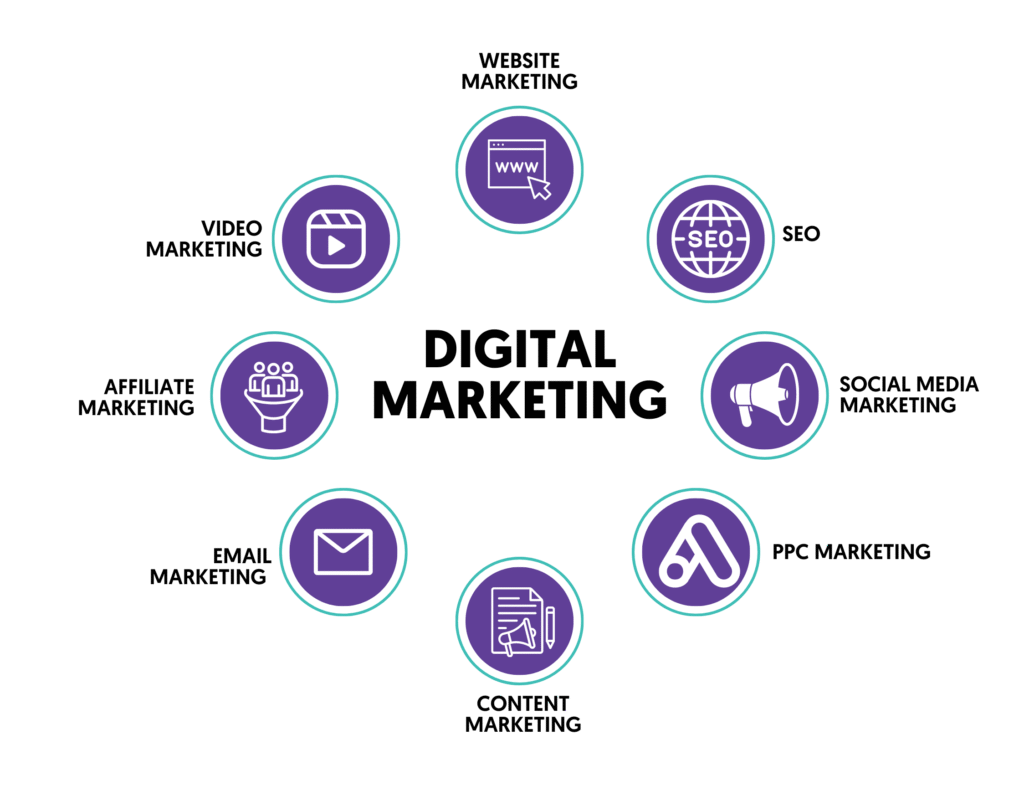
From social media to SEO, content to email, digital marketing encompasses a broad array of disciplines, one of the most high-energy sectors in today’s business.
Why Study Digital Marketing?
Studying digital marketing unlocks the door to infinite possibilities. Whether you wish to:
Launch your own online business
Secure a lucrative marketing career
Build a current company
Be employed as a freelancer or consultant
Developing digital marketing skills can make you shine in a saturated job market or bring your brand to new levels.
Step-by-Step Guide to Learn Digital Marketing
Let’s divide the learning process into distinct, easy-to-follow steps. Whether learning from the ground up or refreshing your knowledge, use the following steps to establish a solid foundation in digital marketing.
Step 1: Learn the Basics of Digital Marketing
First, learn the basics. Before delving into tools and strategies, understand:
What is digital marketing?
How does it differ from traditional marketing?
What are the main components?
Key elements are:
Search Engine Optimization (SEO)
Pay-Per-Click Advertising (PPC)
Social Media Marketing
Email Marketing
Content Marketing
Affiliate Marketing
Analytics & Reporting
Once you get these elements, you’ll know how they all integrate to form a good digital marketing strategy.
Step 2: Learn Search Engine Optimization (SEO)
SEO is the foundation of internet marketing. It’s the act of optimizing your website to appear higher in search results. When people look for keywords related to your business, SEO helps them discover you.
Critical SEO topics are:
Keyword research
On-page SEO (title tags, meta descriptions, headers)
Off-page SEO (backlinks)
Technical SEO (site speed, mobile-friendliness)
Begin by understanding how Google’s algorithm functions and how content optimization is able to generate organic traffic.
Step 3: Discover Content Marketing
Content reigns supreme in digital marketing. Content marketing is creating and distributing valuable, relevant content (such as blog posts, videos, infographics, or podcasts) to attract and retain a clearly defined audience.
Good content assists in:
Building trust and authority
Enhancing SEO
Encouraging social media shares
Nurturing leads
Begin with establishing a blog and exercising your writing of SEO-optimized content. Websites such as Grammarly, Surfer SEO, and Hemingway can assist you in refining your writing and composition.
Step 4: Become a Social Media Marketing Pro
Social media sites like Facebook, Instagram, LinkedIn, X (formerly known as Twitter), and TikTok are critical tools in online marketing. Through them, brands are able to interact with their followers in real-time and develop a dedicated fanbase.
Some of the most important tasks in social media marketing are:
Developing a social media plan
Scheduling and posting content
Interacting with followers
Promoting with paid ads
Monitoring analytics
Each platform has its own strengths, so select the ones most applicable to your target audience.
Step 5: Become Familiar with Email Marketing
Email marketing is one of the highest ROI digital marketing. It enables you to talk directly to your audience, sell products, and build relationships.
Learn how to:
Construct an email list
Segment your audience
Develop automated email sequences
Build newsletters
Analyze open and click-through rates
Tools like Mailchimp, ConvertKit, and HubSpot are great for beginners.
Step 6: Dive into PPC and Paid Advertising
Pay-Per-Click (PPC) advertising is a key component of digital marketing that delivers immediate results. It involves running ads on platforms like Google Ads, Facebook Ads, and LinkedIn Ads to generate traffic and leads.
Learn how to:
Set up a Google Ads campaign
Research keywords and write ad copy
Monitor and optimize performance
Set budgets and bidding strategies
PPC demands strategic thought and continuous testing, but if done correctly, it can generate rapid ROI.
Step 7: Know Web Analytics and Data
Analytics is the digital marketer’s compass. It indicates what is working and what is not. Utilizing tools such as Google Analytics, you can monitor website traffic, user behavior, and conversion rates.
Important metrics to measure are:
Traffic sources
Bounce rate
Time on site
Conversion rate
ROI
Make informed decisions based on data to optimize your digital marketing campaigns and achieve maximum success.
Step 8: Find Out About Marketing Funnels and Automation
It’s crucial to know how the customer navigates from awareness to purchase. This is where marketing funnels come in.
A general funnel consists of:
Awareness
Interest
Consideration
Purchase
Retention
Marketing automation software such as HubSpot, ActiveCampaign, and GetResponse assist you in running leads through the funnel with little manual effort.
Step 9: Create Your Own Website or Blog
To really learn digital marketing, build your own site or blog. This provides a real-world environment where you can experiment with all that you’ve learned—SEO through content, email, and social media.
Start with websites like WordPress or Wix. Learn to:
Build a user-friendly website
Construct landing pages
Add tracking codes
Optimize for speed and mobile
This practical experience is worth more than any theory.
Step 10: Keep Practicing and Stay Updated
Digital marketing evolves daily. Algorithms are updated, platforms change, and new tools come out. To remain relevant, you must be a continuous learner.
Read the best blogs and influencers such as:
Neil Patel
Moz
HubSpot
Backlinko
Social Media Examiner
Also, participate in forums and groups, enroll in online courses (Google Digital Garage, Coursera, Udemy), and practice regularly.
Tips for Beginners in Digital Marketing
These are some last tips to guide you on your path:
Begin with free material before spending money on paid courses
Work on one task at a time (e.g., SEO, then social media)
Use the lessons you learn immediately
Monitor your progress
Don’t be afraid of failure—it’s a part of learning
Conclusion
Learning digital marketing is perhaps one of the most valuable skill sets that you can learn in today’s economy. It allows you to develop a business, establish a brand, and generate financial independence.
By taking this step-by-step beginner’s guide, you are able to establish a solid foundation in digital marketing and begin putting your skills to the test in practical situations.
Consistency is the key. Practice every day, and you’ll be more confident. So go ahead and take the very first step today—learn digital marketing, and unlock unlimited opportunities. for more updated you can view latest blog for more updated you can view latest blog